 Rewards infrastructure for Africa
Corporate Gift Cards in Africa: A Multi-Country Buying Guide
How procurement and people teams can buy corporate gift cards across African markets without managing separate vendors, currencies and delivery processes.
Abby Sotomiwa
Co-Founder & CEO, RibiRewards
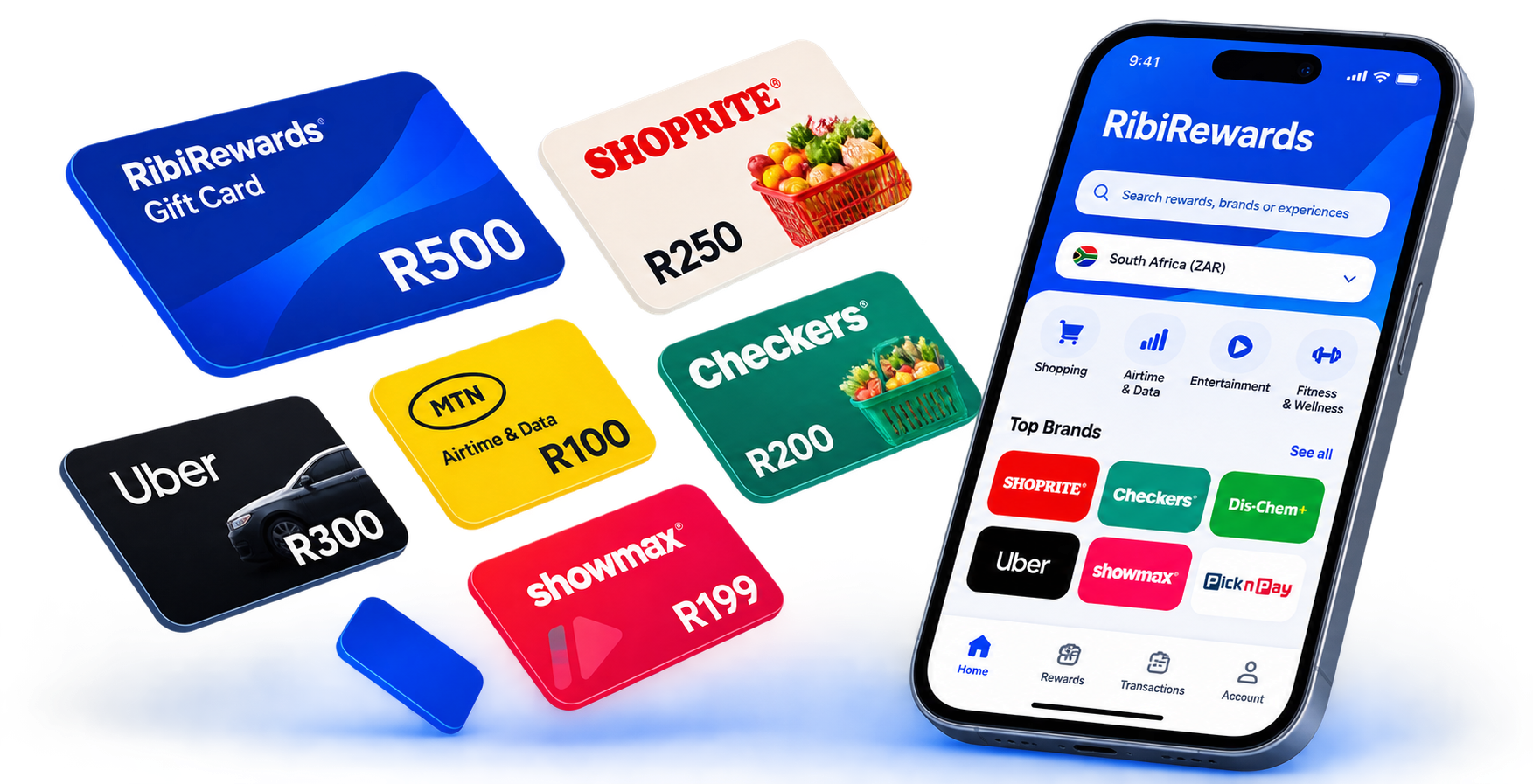
Buying corporate gift cards for one office is a purchase order. Buying them for teams, clients or partners across five African countries is a project, with different brands, currencies, tax questions and delivery channels in every market. This guide is for the HR, procurement and people operations teams who have to run that project.
The request usually arrives with a deadline attached. Year-end is six weeks away, leadership wants every employee across the group to receive a gift, and the group has offices in Lagos, Nairobi, Accra, Johannesburg and Kigali. The first instinct is to ask each country's office manager to buy locally. The result, predictably, is five suppliers, five sets of invoices, five different gift values once exchange rates are applied, and no single view of who received what.
There is a better way to run it, and it starts well before anyone places an order.
Decide what you are actually buying
"Gift cards" covers several different products, and choosing the right one for each audience matters more than choosing the supplier.
- Single-brand cards are tied to one retailer, such as a supermarket. They feel tangible and are easy to explain, but only work if the recipient likes that brand.
- Choice or multi-brand cards let the recipient pick from a list of brands. They are usually the safest default for mixed groups. Our guide to choice gift cards explains how they work.
- Airtime and data are universally useful, instant and appreciated for smaller values, but feel less like a gift at higher values.
- Experience vouchers for dining, spa or leisure suit milestones and senior recipients, and need local availability checks.
For most multi-country employee programmes, a choice card with strong local brands in every market is the simplest answer. For client gifts, a more curated option often lands better.
Set values that are fair across markets
This is where multi-country programmes go wrong most often. If you set one dollar value and convert it, recipients in different countries receive amounts that mean very different things locally. If you set one local-currency figure for everyone, the cost to the company varies widely.
There is no perfect answer, but there are defensible ones. Common approaches include setting values by market based on local purchasing power, setting one company-wide value and converting it at a fixed rate on a set date, or setting tiered values by role and applying the same tiers in each market. Whichever you choose, write the rule down before you start, apply it consistently, and be prepared to explain it.
| Approach | Advantage | Watch out for |
|---|---|---|
| One global value, converted | Simple to approve and explain | Local value differs by market; FX timing matters |
| Value set per market | Feels fair locally | Needs a clear rationale; harder to approve centrally |
| Tiered by role, same tiers everywhere | Consistent with pay structure | Still needs a currency rule per tier |
Check the tax position early
Gifts to employees may be treated as taxable benefits in some African countries, and the rules, thresholds and reporting requirements vary. Gifts to clients and partners raise different questions, including anti-bribery policies and limits in your own code of conduct. Do not treat this as a detail to sort out after the gifts go out.
Speak to payroll and your tax advisers in each country before you set values. Ask your supplier for clean issuance records showing each recipient, value, currency and date, which make reporting far easier. Our guide on tax-compliant corporate gifting in Nigeria, Kenya and Ghana covers the common questions, and our benefits compliance page has more context.
Get the recipient list right
Most delivery problems trace back to the recipient list. Before you order, make sure every row has a name, country, a working email address or mobile number in international format, and the value and product they should receive. Remove duplicates and leavers. Decide which channel to use per market: email works well for office-based staff, while SMS or WhatsApp often reaches field and frontline teams more reliably.
Ask each country lead to check their part of the list. Ten minutes of local review prevents dozens of failed deliveries.
Choose one supplier, not five
The main reason to consolidate is control. One supplier means one contract, one invoice, one currency to fund in, one report and one place to fix problems. It also means every recipient gets the same quality of experience, regardless of which office they sit in.
When you evaluate suppliers for a multi-country programme, check five things.
- Local catalogue in every market, with brands recipients use, priced in local currency.
- Delivery by email, SMS and WhatsApp, with a redemption page that works on a basic smartphone.
- Bulk issuance from a spreadsheet or dashboard, without engineering work.
- Reporting by recipient, showing delivered, opened and redeemed where available.
- Recipient support that answers questions locally and quickly.
Plan the timeline backwards
For a year-end programme, work back from the date you want rewards to land.
- Six to eight weeks before: agree budget, values by market and product type; confirm tax treatment.
- Five weeks before: select the supplier; agree pricing and funding.
- Four weeks before: collect and clean the recipient list; draft the message from leadership.
- Three weeks before: fund the programme; run a test send to a small group in each country.
- Two weeks before: final list sign-off; schedule delivery.
- Delivery day: send, monitor delivery failures and resend where needed.
- Two weeks after: review redemption, close out reporting and record what to change next year.
Funding deserves a specific mention. International transfers can take days, and some suppliers need funds to clear before issuing. Build that time in, especially in December when banking cut-offs bite.
Make the message count
A gift card with no message is a transaction. A gift card with a short, specific note from a leader is recognition. Personalise where you can, at least by country or team, and send in the recipient's working language. Include clear redemption steps and a support contact. Recipients who cannot work out how to use a gift remember the frustration, not the gift.
Measure the result
After the programme, look at delivery success by country, redemption rate, time to redeem and support tickets. Redemption rate is the clearest signal of whether you chose the right product. If one market redeems far less than others, the catalogue there probably did not suit recipients, and you know what to change next year.
A worked example
An illustrative group with 900 employees: 400 in Nigeria, 250 in Kenya, 150 in Ghana and 100 in South Africa. Leadership approves a year-end gift budget and asks HR to make it fair across countries.
HR sets three value bands by level and translates each into local currency at a fixed rate agreed with finance on 1 November, rounded to values brands actually issue. The default product is a local choice card in each country, covering supermarkets, airtime, fuel and popular retail. Senior leaders receive a higher-value choice card plus a physical hamper sourced locally.
Payroll in each country confirms the tax treatment with local advisers before values are final. Country HR leads clean their part of the recipient list: office staff by email, warehouse and field teams by SMS. A test send goes to two people per country, which catches a set of Kenyan numbers saved without the country code.
Gifts land on the same morning in all four countries, with a short message from the CEO in each office's working language. Two weeks later the report shows delivery and redemption by country. Redemption is lowest among Ghanaian field staff, and feedback reveals the catalogue there lacked a fuel option. That is added for next year.
Frequently asked questions
Can we mix digital gift cards and physical gifts?
Yes. Many organisations send a digital choice card to everyone and add a physical gift for specific groups, such as senior leaders or long-serving staff. See our December collection for physical options.
How far in advance should we order?
For year-end programmes, start planning six to eight weeks ahead, and fund at least two weeks before delivery to allow for transfers and testing.
Can recipients swap a card they don't want?
With a choice card, recipients pick the brand themselves, which removes most of the need to swap. Single-brand cards are usually not exchangeable.
Where RibiRewards fits
RibiRewards lets HR and procurement teams buy corporate gift cards across African markets through one supplier: local choice cards, single-brand cards, airtime and experiences, priced in local currency, delivered by email, SMS or WhatsApp, and issued in bulk from a spreadsheet or our bulk digital rewards tools. For physical gifts and hampers alongside digital cards, see our December collection.
Plan your multi-country gift programme
Send us your markets, headcount per country and budget, and we will propose values, products and a delivery plan. Talk to us
Further reading
Abby Sotomiwa
Co-Founder & CEO, RibiRewards
Building rewards infrastructure for African markets: gift cards, airtime and local fulfilment through one API.
RibiRewards Insights
Practical analysis on incentive strategy, programme operations, reward delivery, markets and infrastructure across Africa.
One platform for every employee reward across Africa
Choice gift cards, benefits, recognition — managed from one dashboard in your currency and markets. Request a demo and we'll tailor it to your setup.
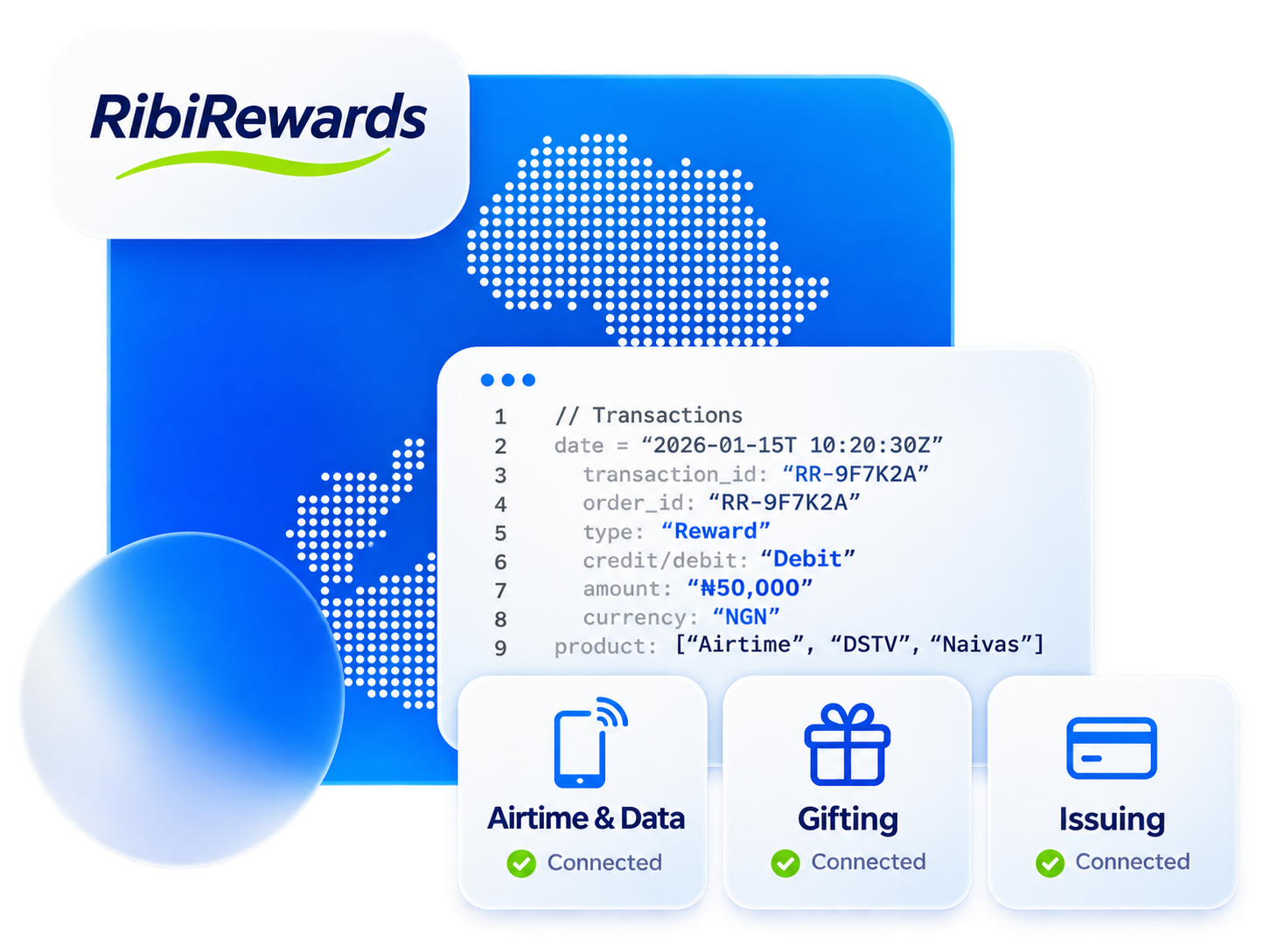 GLOBAL INTEGRATIONS
Gift Card API for Africa: Multi-Country Rewards Through One Integration
A practical guide to integrating local gift cards and reward delivery across African markets without building a supplier stack country by country.
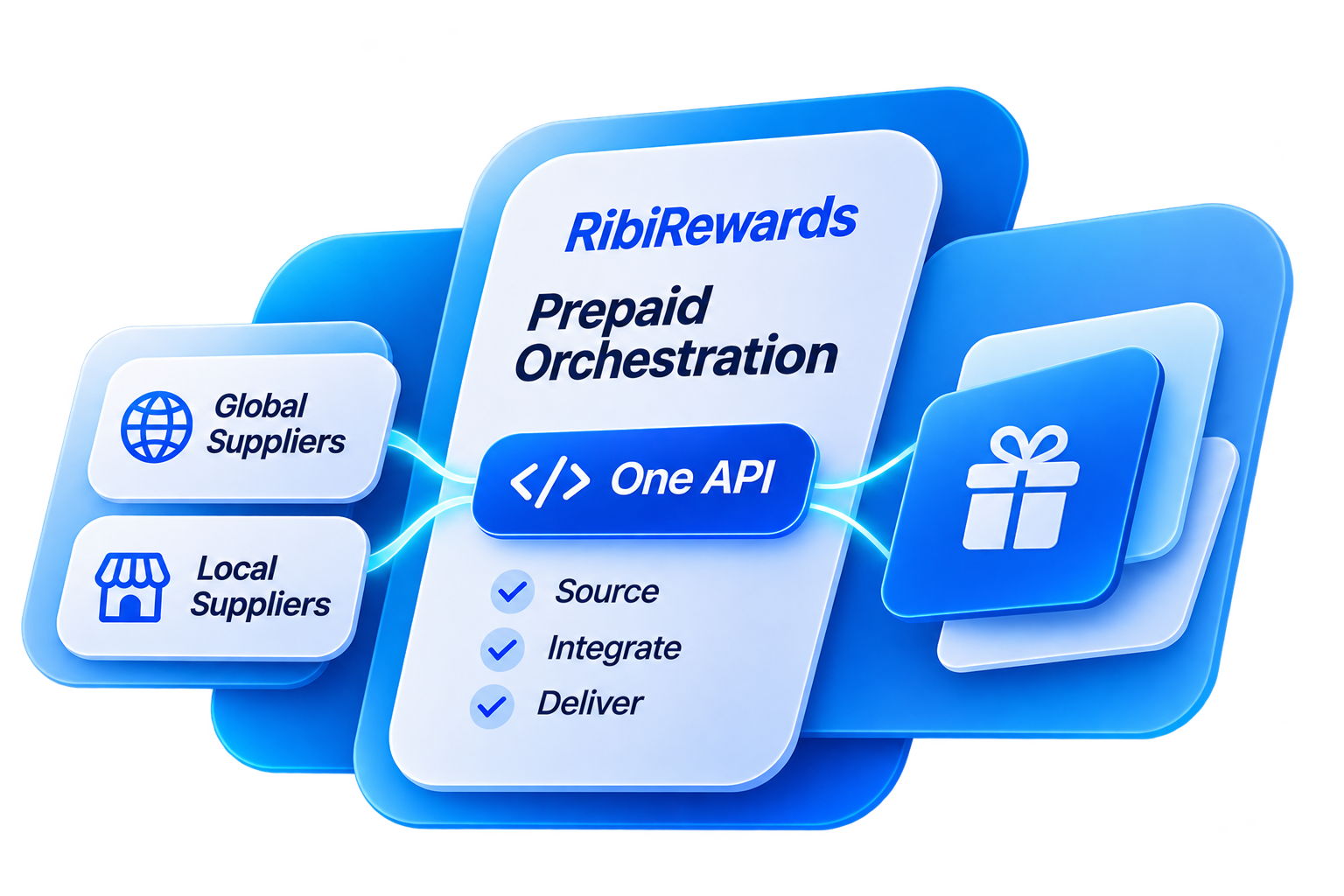 GLOBAL INTEGRATIONS
Africa Rewards API: A Technical Guide for Global Reward Platforms
What global rewards, loyalty and incentive platforms need from an African rewards API: catalogue, funding, issuance, webhooks, reconciliation and local fulfilment.
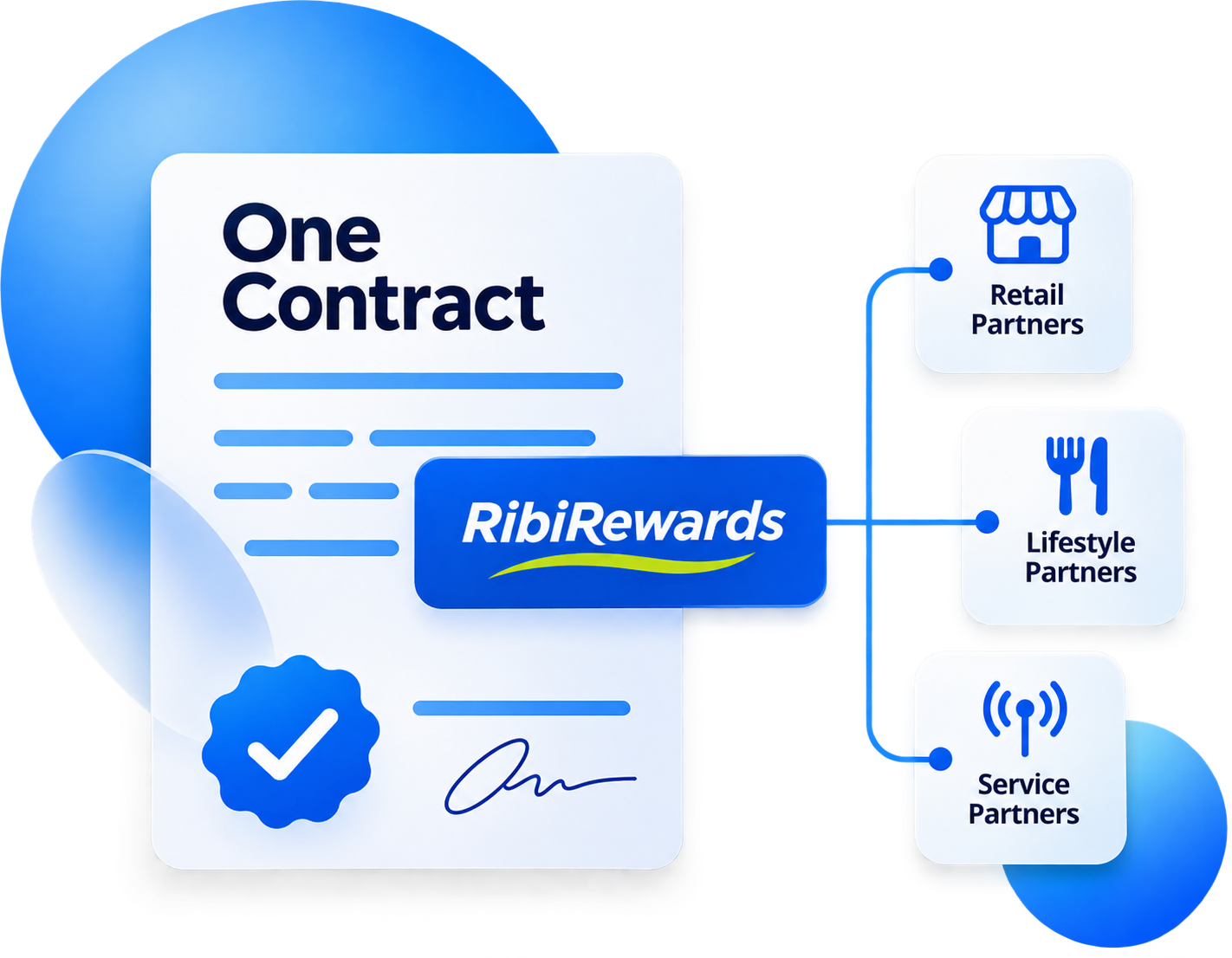 GLOBAL INTEGRATIONS
How Global Incentive Platforms Can Add African Reward Coverage
A commercial and operational framework for extending an existing incentive or rewards platform into African markets through one infrastructure partner.