 Rewards infrastructure for Africa
Employee Rewards Across Africa for Multinational Companies
How multinational employers can run locally relevant employee rewards across African offices while keeping central control, reporting and funding.
Abby Sotomiwa
Co-Founder & CEO, RibiRewards
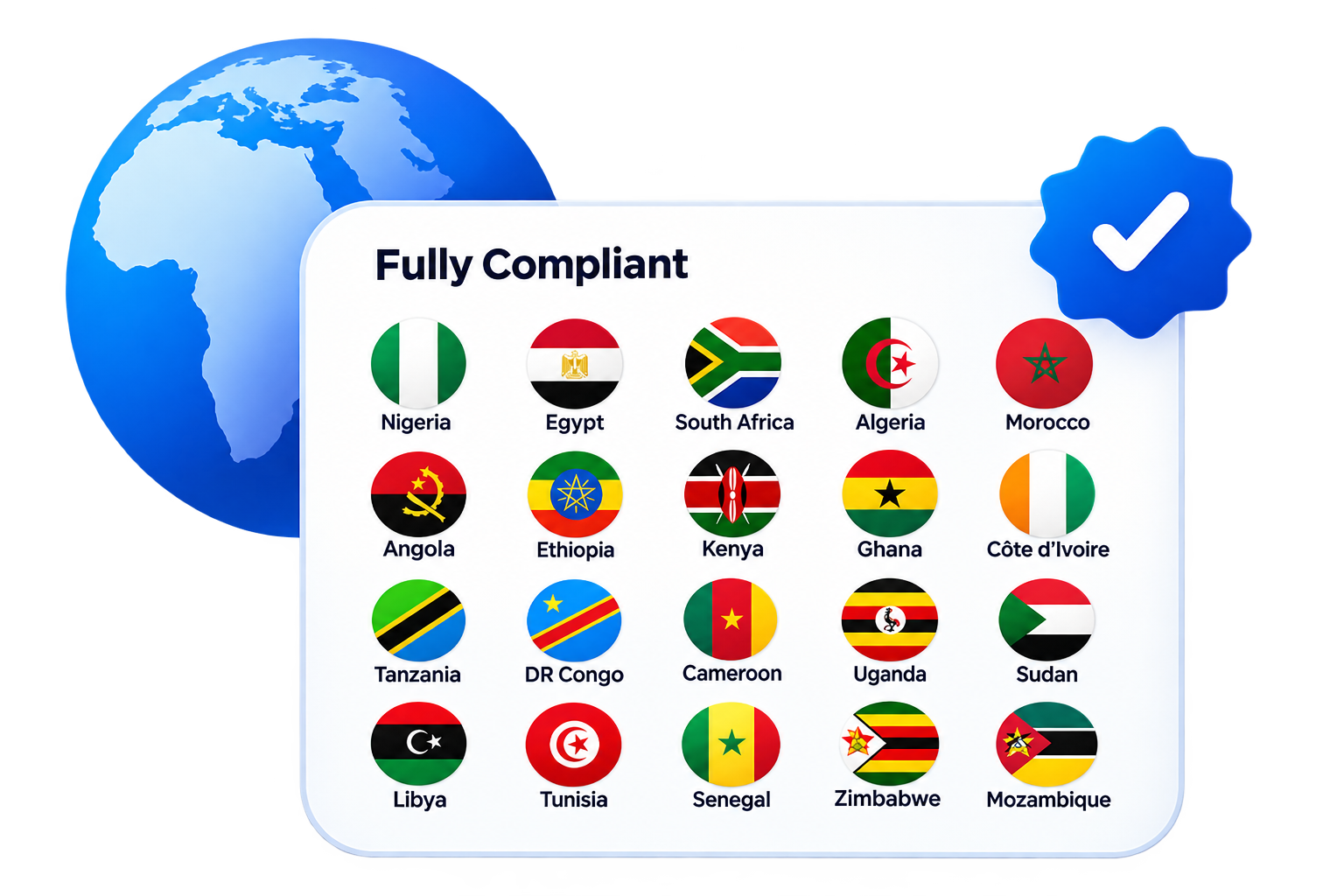
Multinationals usually run employee rewards from a global HR stack designed in London, New York or Paris. In their African subsidiaries, that stack often stops at the payslip. Recognition points have nothing local to spend on, benefits do not fit local life, and country HR teams quietly run their own workarounds. This guide is about closing that gap.
If you lead reward, HR or people operations for a multinational with teams in Africa, you have probably seen the symptoms. The global recognition platform shows high engagement in Europe and near-silence in Nigeria and Kenya. The long-service award catalogue is full of products that cannot be delivered to Accra. The Lagos HR manager buys year-end hampers from a local supplier on a corporate card and sends the receipts to finance in January. Everyone knows the African experience is different; nobody owns fixing it.
The cost is real even if it rarely shows up in a dashboard. Employees in African markets notice when their colleagues elsewhere get rewards they cannot use, and local HR teams lose hours every month running manual processes that should be automated.
Why the global stack stops at the border
Global HR and recognition platforms are built on supply networks that are strong in North America and Europe and thin in Africa. When an employee in Nairobi redeems recognition points, the platform's catalogue may offer international e-commerce cards that are hard to use locally, or ship physical products with long delivery times and import costs.
The problem is rarely the platform's interface. It is the supply behind it: local brands, local currency, local delivery and local support. Our piece on why global recognition platforms don't reach Africa looks at this in detail.
What African employees actually value
Reward preferences differ by country, sector and seniority, so treat any generalisation with care. That said, a few patterns are consistent across many African workplaces.
- Practical value: groceries, fuel, airtime and data, and school-related costs often matter more than luxury items.
- Choice: letting people pick from local brands avoids gifts that miss.
- Speed: rewards that arrive within days of a milestone feel like recognition; rewards that arrive months later feel like administration.
- Family: benefits and gifts that help with family life, from groceries to school fees, tend to be valued highly.
- Visible fairness: employees compare notes. If one country receives noticeably less, people find out.
The practical conclusion is to design a global framework and deliver it through local rewards.
A global framework with local delivery
The model that works best for most multinationals has three layers.
- Global policy: the moments you recognise (service anniversaries, spot awards, year-end, new hires), the value bands by level and the approval rules. Set centrally, applied everywhere.
- Local translation: values converted into local currency using a clear, documented rule; products chosen from a local catalogue for each country.
- One delivery layer: a single provider that issues rewards in every market, reports centrally and supports employees locally.
This keeps the employee experience consistent in spirit while making sure every reward actually works where it lands.
Plugging into the systems you already use
Most multinationals do not want another standalone platform. The goal is to make African rewards available inside the systems employees already use.
If you run a global recognition platform such as Workhuman, Achievers, Bonusly or Kudos, an African rewards provider can sit behind it as the local catalogue, so points earned in the platform can be redeemed for local brands. If your HRIS or payroll system triggers events such as anniversaries, those events can call a rewards API directly. Our guides on adding African rewards to Achievers and filling Workhuman's local fulfilment gap cover two common set-ups.
Where integration is not possible yet, a dashboard and bulk upload let local HR teams issue rewards consistently without a corporate card and a spreadsheet of receipts.
Tax, payroll and compliance
Non-cash rewards can be taxable in some jurisdictions and the rules vary by country, value and reward type. Some countries have thresholds below which small gifts are treated differently; others treat most employer-provided value as a benefit in kind. Do not apply your home-country assumptions.
Work with local payroll and tax advisers in each market to decide how each reward type is treated, then make sure your rewards provider supplies recipient-level issuance records that payroll can use. Our cross-border rewards guide covers the questions to ask.
Budget and FX
Global reward budgets are usually set in a reporting currency, often dollars, euros or pounds. Local rewards are issued in naira, cedi, shillings, rand and more. Decide how and when you convert. Converting at issuance protects the employee from rate movements; converting at budget approval protects the budget. Many organisations set local-currency values annually and review them if a currency moves sharply, which keeps employee experience stable and gives finance a predictable process.
Measuring whether it works
Track a few measures by country rather than globally, because global averages hide African gaps.
- Share of eligible moments that actually received a reward
- Time from milestone to reward
- Redemption rate and time to redeem
- Employee feedback on rewards, by country
- HR hours spent on manual reward administration
The last one is often the quickest win. Moving local teams off manual purchasing frees time and removes a common audit headache.
A rollout plan
- Audit what each African subsidiary does today for rewards, including informal workarounds.
- Agree the global framework and value bands with group reward.
- Choose a delivery provider that covers all your African markets.
- Pilot in two countries with one moment, such as service anniversaries.
- Connect to your recognition platform or HRIS once the pilot is working.
- Extend to all moments and markets, with quarterly reviews of redemption by country.
A worked example
Take an illustrative multinational with 1,800 employees across Nigeria, Kenya, Ghana and South Africa, running a global recognition platform alongside a long-service award programme managed from Europe.
The audit finds that African employees redeem recognition points at a fraction of the European rate, because the catalogue offers mostly international products. Long-service awards for African staff arrive months late, if at all, because physical items are shipped from Europe. Each country HR team also runs its own year-end gifts on corporate cards.
Group reward keeps the global framework: the same moments, the same value bands by level. It adds a local delivery layer. Recognition points earned in the platform can now be redeemed in each country for local supermarket cards, airtime, fuel and choice cards. Long-service awards switch to locally sourced items or a high-value choice card, delivered within two weeks of the anniversary. Year-end gifts move to one bulk programme across all four markets, with values set per country under a documented rule.
Within two quarters, the company can report by country on reward coverage, timeliness and redemption for the first time. Local HR teams stop buying gifts on corporate cards, and the audit exception that came up every year disappears.
Frequently asked questions
Do we need to replace our global recognition platform?
Usually not. An African rewards provider can sit behind your existing platform as the local catalogue and fulfilment layer, so employees keep the same experience.
Should African employees get the same value as everyone else?
Most organisations keep the same value bands but translate them into local currency using a documented rule. Some adjust for purchasing power. The key is a consistent, explainable approach.
Can rewards be delivered to employees without corporate email?
Yes. Frontline and field employees can receive rewards by SMS or WhatsApp, which is often more reliable than email for those teams.
How do we handle employees in countries we only have a few people in?
A provider with broad coverage can serve small teams in additional countries through the same programme, so nobody is left out because a country is too small to justify a local vendor.
Where RibiRewards fits
RibiRewards is the African rewards layer for multinationals: local gift cards, airtime, choice cards and experiences across 13+ markets, delivered through your existing recognition platform, your HR systems via API, or our dashboard. For employee benefits such as meal, transport and wellness allowances, our sister brand RibiPeople covers the benefits side. One provider, one report, and rewards that work in every office you run.
Close the Africa gap in your rewards
Tell us your African headcount by country and the platforms you use today, and we will map a rollout. Talk to us
Further reading
Abby Sotomiwa
Co-Founder & CEO, RibiRewards
Building rewards infrastructure for African markets: gift cards, airtime and local fulfilment through one API.
RibiRewards Insights
Practical analysis on incentive strategy, programme operations, reward delivery, markets and infrastructure across Africa.
One platform for every employee reward across Africa
Choice gift cards, benefits, recognition — managed from one dashboard in your currency and markets. Request a demo and we'll tailor it to your setup.
 GLOBAL INTEGRATIONS
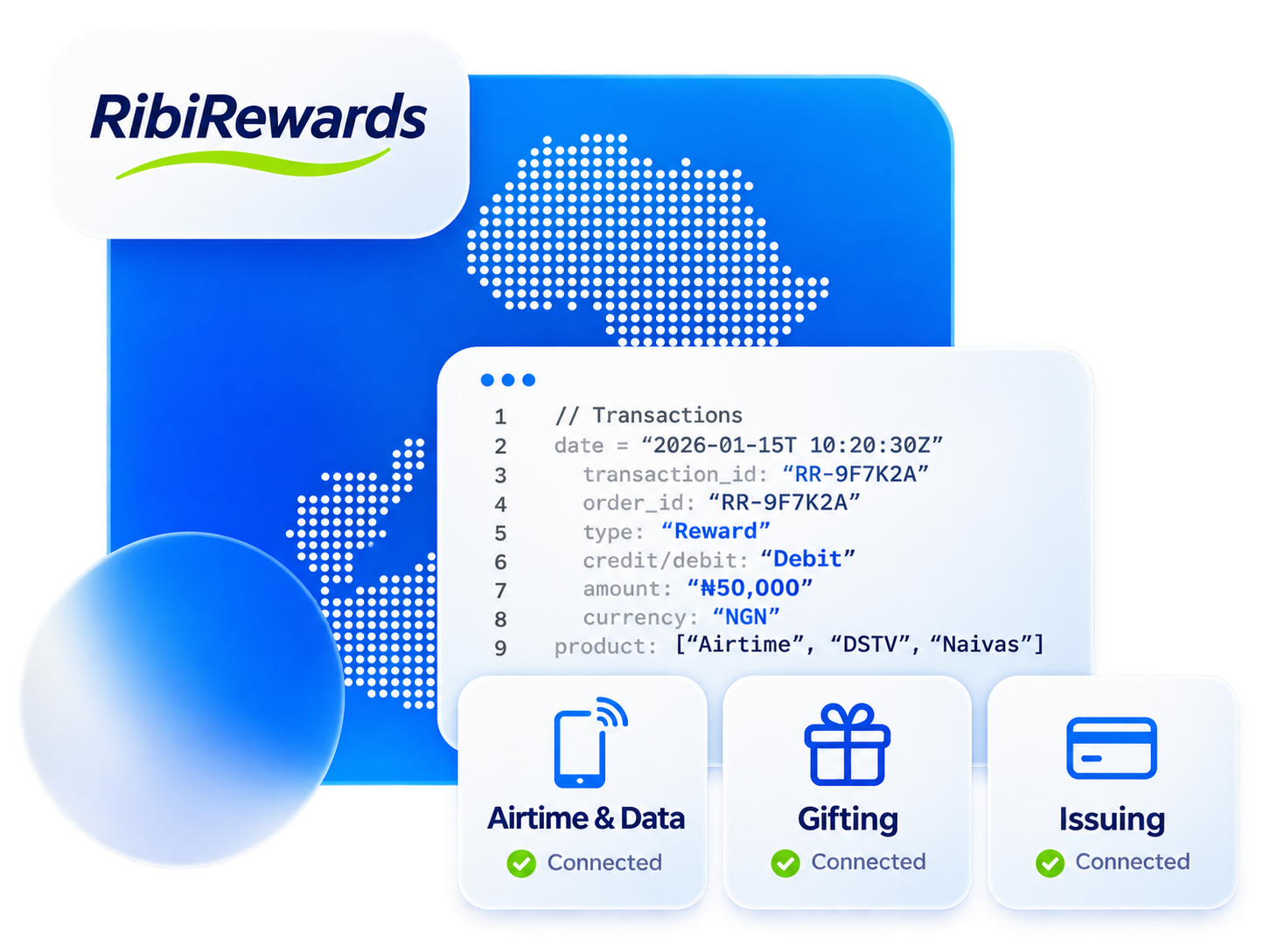
Gift Card API for Africa: Multi-Country Rewards Through One Integration
A practical guide to integrating local gift cards and reward delivery across African markets without building a supplier stack country by country.
 GLOBAL INTEGRATIONS
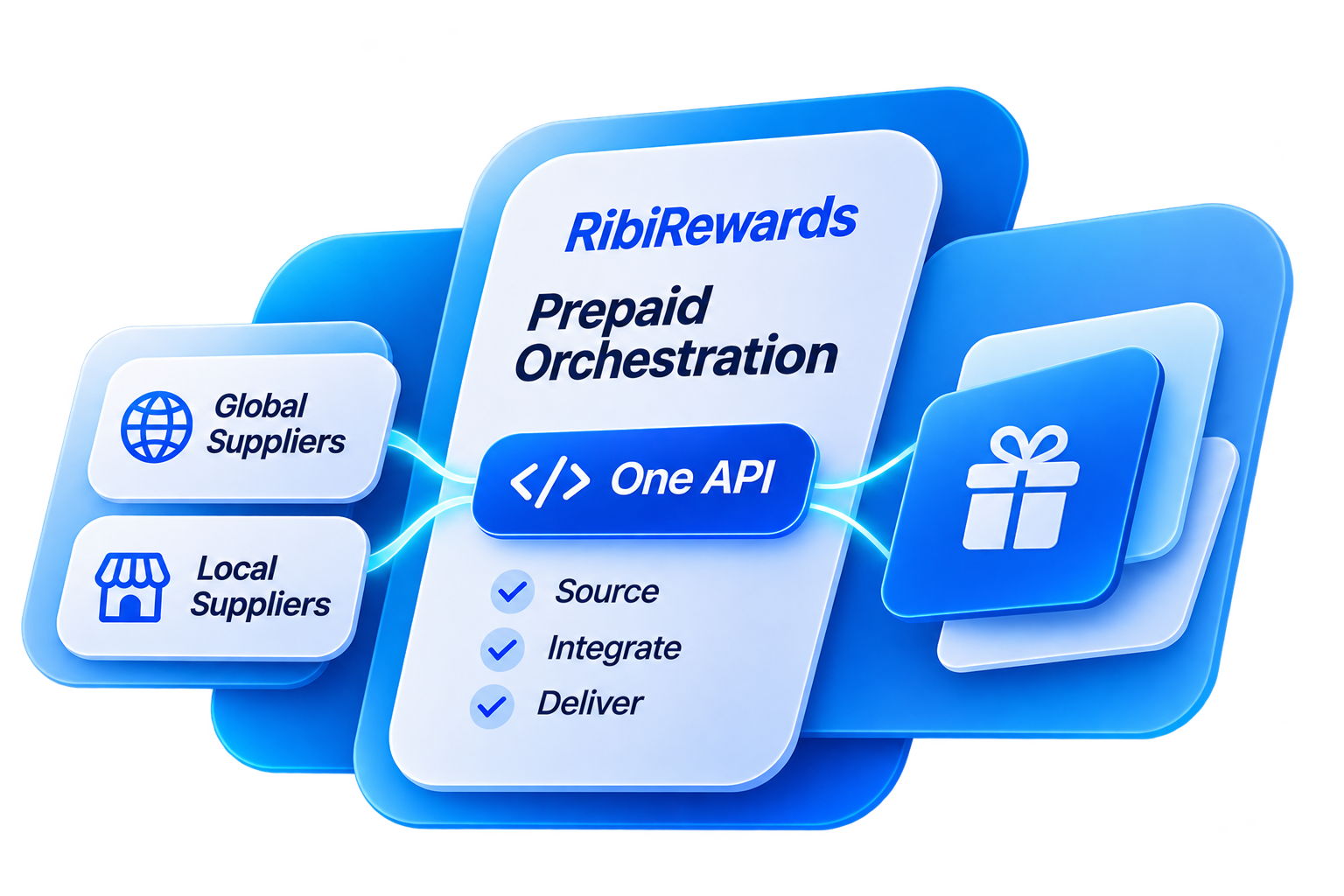
Africa Rewards API: A Technical Guide for Global Reward Platforms
What global rewards, loyalty and incentive platforms need from an African rewards API: catalogue, funding, issuance, webhooks, reconciliation and local fulfilment.
 GLOBAL INTEGRATIONS
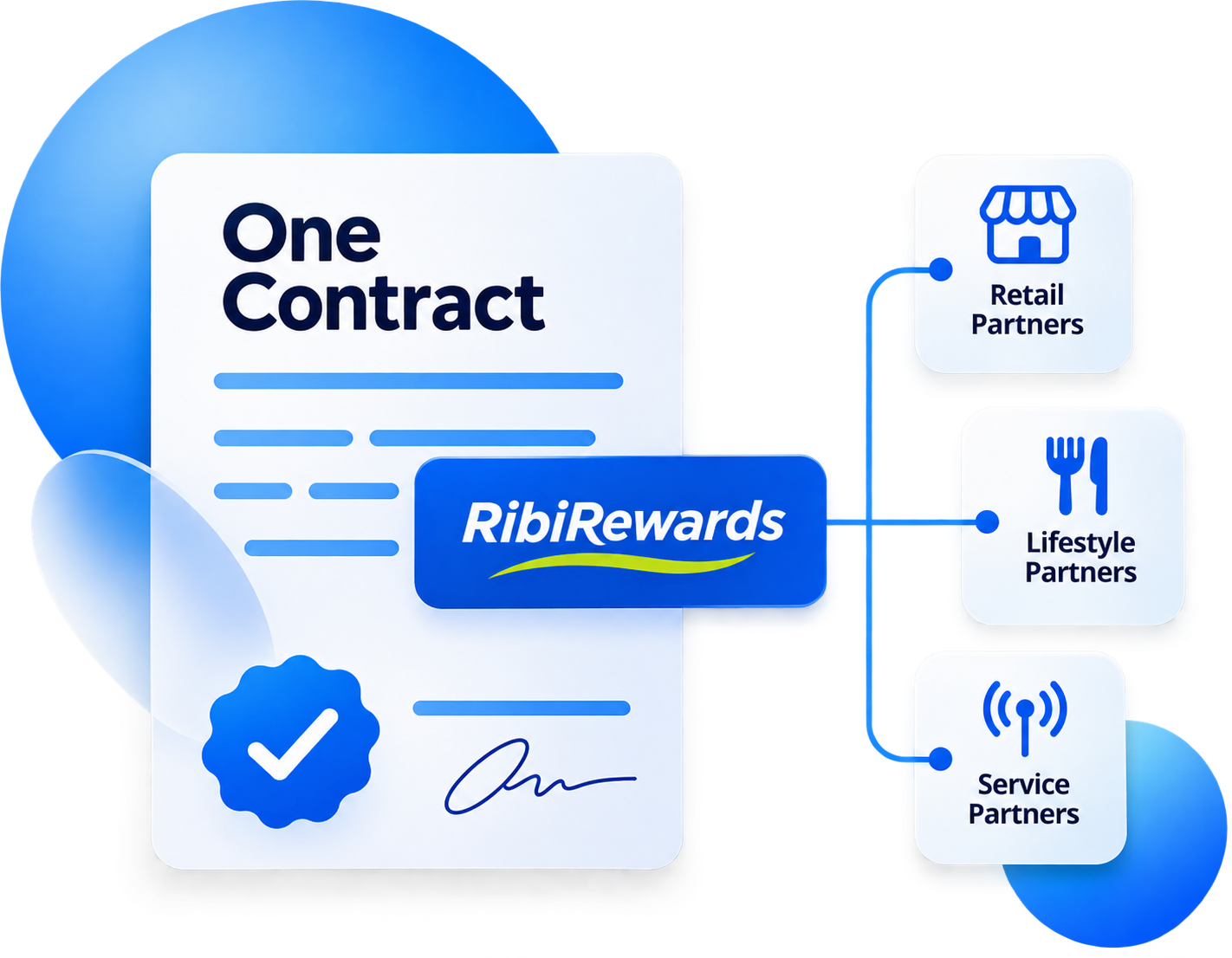
How Global Incentive Platforms Can Add African Reward Coverage
A commercial and operational framework for extending an existing incentive or rewards platform into African markets through one infrastructure partner.