How SeamlessHR Customers Can Add Rewards to Their HR Stack
SeamlessHR handles payroll and HRIS for thousands of African companies. Here's what's missing from the stack — and how RibiRewards adds choice-based rewards and benefits across 10 African markets alongside it.
Abby Sotomiwa
Co-Founder & CEO, RibiRewards

Quick answer: SeamlessHR handles payroll, HRIS, compliance, and performance for thousands of African companies. What it doesn't handle is the recognition and rewards layer -- the part that makes employees feel seen beyond their salary. RibiRewards sits alongside SeamlessHR to complete the employee experience stack: choice-based RewardsCards, Benefits, and experience rewards across 10 African markets, integrated via API or run standalone.
SeamlessHR processed ₦950 billion in salaries across Africa in 2025. That's a staggering number -- and it reflects what the platform does exceptionally well. It is payroll and workforce infrastructure at genuine scale, with offices in Nigeria, Ghana, and Kenya, and enterprise clients including FCMB, Sterling Bank, Wema Bank, and VFD Group.
But payroll is not recognition. The two systems serve different functions, and companies that use SeamlessHR -- or any payroll platform -- and assume that good payroll execution covers the recognition job are leaving a meaningful retention gap unaddressed.
This post is specifically for HR teams and people leads already using SeamlessHR who want to understand what a rewards layer looks like, how it fits alongside their existing stack, and what it takes to get it running.
What SeamlessHR covers -- and where the gap is
SeamlessHR's platform covers the full HR lifecycle: ATS, onboarding, payroll processing, leave management, performance management, talent development, time and attendance, and learning and development. It is comprehensive HR and workforce infrastructure.
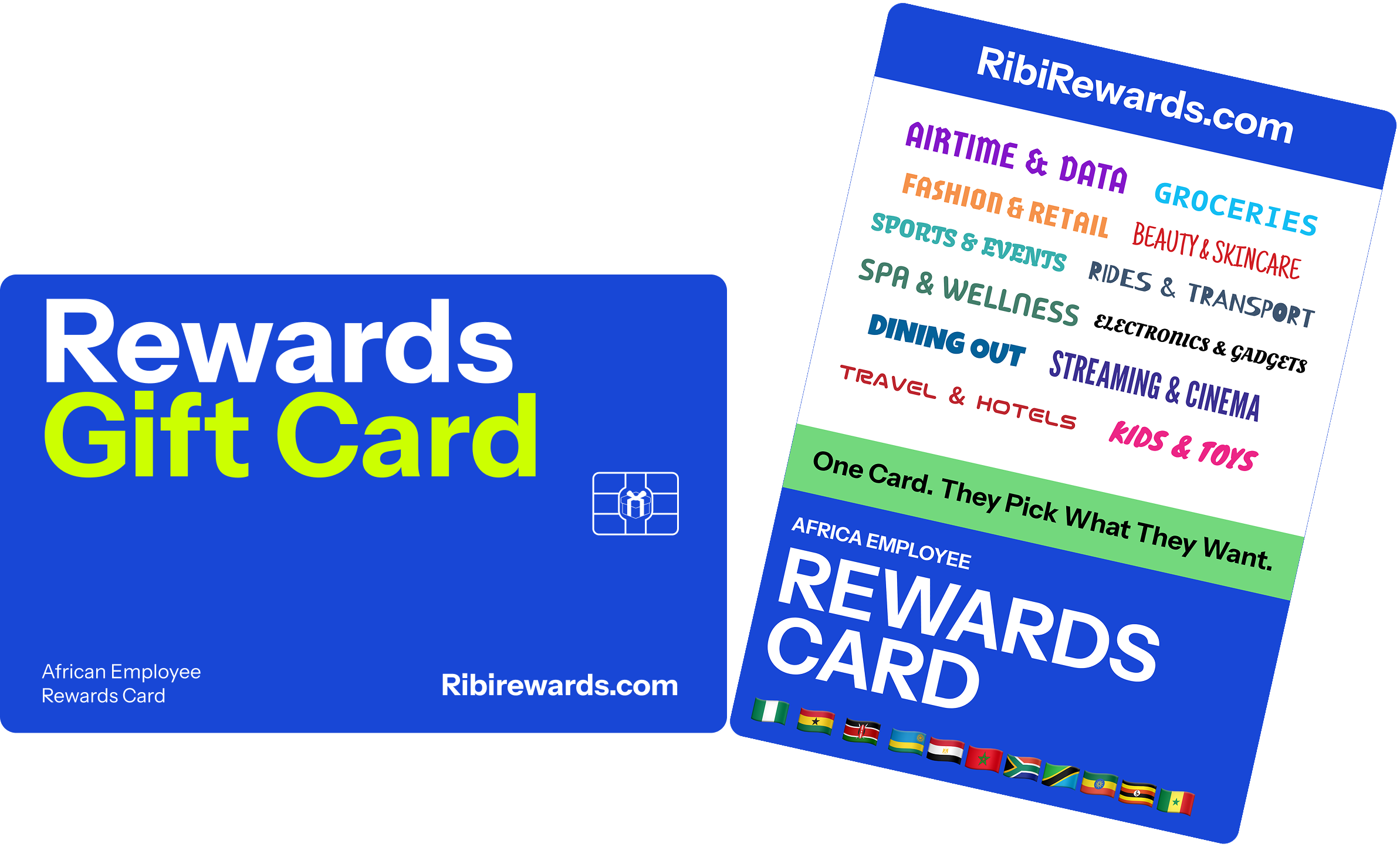
What it doesn't include is a dedicated recognition and rewards product. There's no RewardsCard that lets an employee choose from a localised African catalogue. There's no benefits wallet funded by the employer and drawn down across HMO top-ups, meal allowances, and transport credits. There's no occasion-based card system for onboarding, work anniversaries, or festive gifting with per-country localisation.
That's not a gap in SeamlessHR's vision -- it's a deliberate category boundary. Payroll and HR operations infrastructure is their core. Recognition is a separate job that requires separate infrastructure. That's where RibiRewards comes in.
What RibiRewards adds to a SeamlessHR stack
| Recognition moment | SeamlessHR | RibiRewards |
|---|---|---|
| Payroll processing | Yes Core product | -- |
| HRIS / employee records | Yes Core product | -- |
| Leave & attendance | Yes Core product | -- |
| Performance management | Yes Core product | -- |
| Onboarding welcome gift | -- | Yes RewardsCard -- choice-based, localised |
| Work anniversary recognition | -- | Yes RewardsCard + physical card option |
| Year-end / festive gifting | -- | Yes Multi-country from one dashboard |
| Employee benefits wallet | -- | Yes HMO top-up, meal, transport, L&D |
| Performance reward card | -- | Yes Choice-based, 10 African markets |
| Localised occasion card designs | -- | Yes Pidgin, Swahili, English + more |
How integration works
RibiRewards is API-first. For SeamlessHR customers who want automated triggers -- send a RewardsCard when a work anniversary fires in SeamlessHR, for example -- integration is available via the RibiRewards API. For teams that want to start without an engineering dependency, the standalone HR dashboard lets you upload a CSV of recipients, fund a wallet, and send across all your African markets in under 10 minutes.
The two approaches aren't mutually exclusive. Many companies start with the standalone dashboard to run their year-end or onboarding programme, and integrate via API once they've established a recurring cycle. The integration documentation covers both paths.
Multi-country: the specific advantage for SeamlessHR's enterprise clients
SeamlessHR's enterprise clients -- the banks, telcos, FMCG companies, and large professional services firms -- have teams across multiple African markets. A recognition programme that only works in Nigeria, or that sends a Lagos-built voucher to a Nairobi employee, is not a recognition programme. It's a gesture that communicates the company didn't account for where that employee actually is.
RibiRewards covers Nigeria, Kenya, Ghana, South Africa, Egypt, Morocco, Tanzania, Uganda, Senegal, and Ethiopia from one HR dashboard. Each market has its own localised catalogue. HR funds centrally and distributes across countries in one workflow. The employee in Nairobi and the employee in Lagos both receive something relevant to where they are. This is what country-specific rewards infrastructure actually means in practice.
Getting started: what it looks like in practice
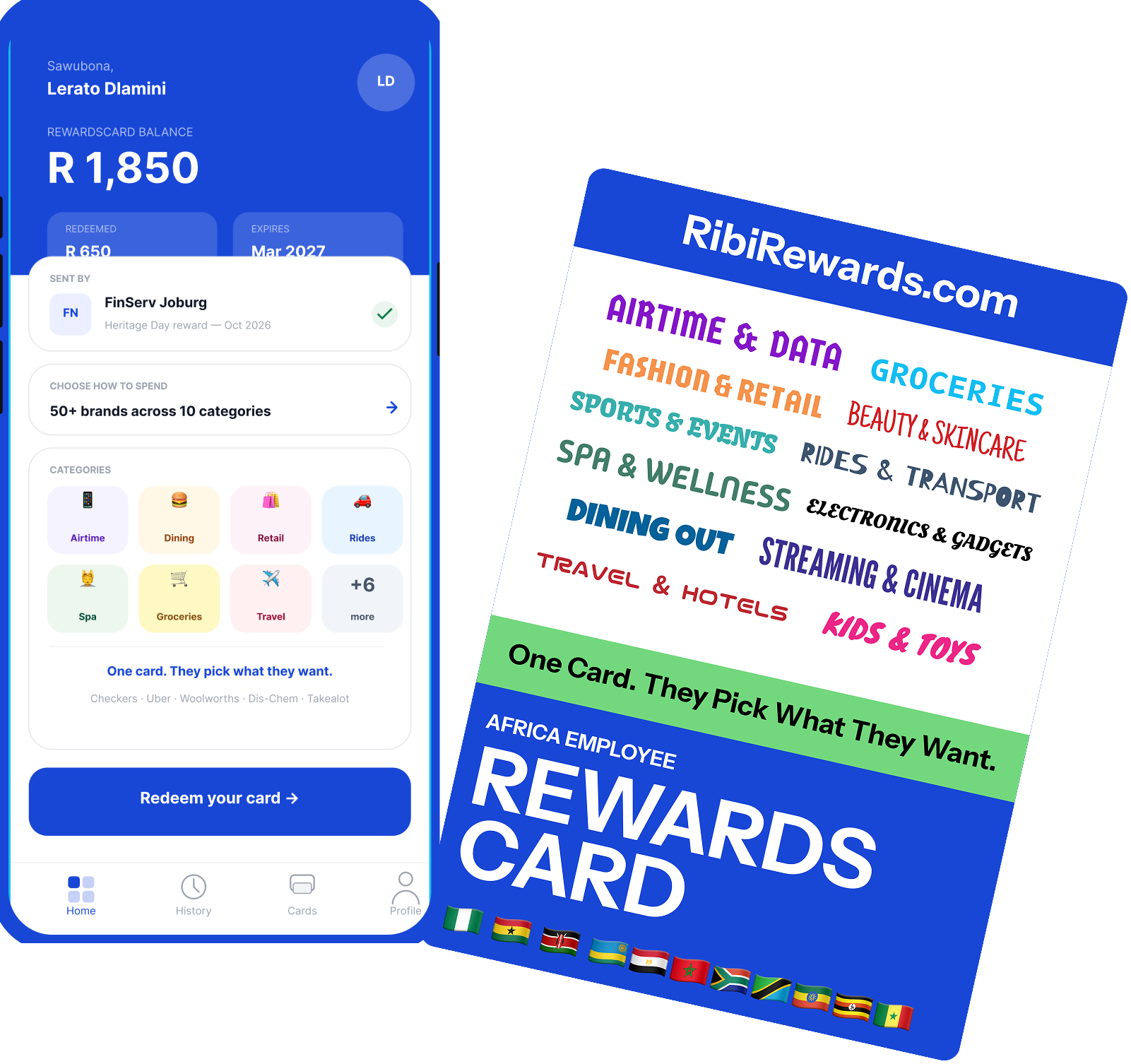
For most SeamlessHR customers, adding RibiRewards to the stack takes less than a week to go live:
- Day 1: Account setup and wallet funding. Define your recognition occasions -- onboarding, anniversaries, year-end, performance milestones.
- Day 2–3: Export your employee list from SeamlessHR. Upload to RibiRewards dashboard with country tags.
- Day 4–5: Configure occasion card designs, add personalised messages, review catalogue per market.
- Week 2 onwards: Optionally connect via API to trigger automatic sends from SeamlessHR events (work anniversaries, performance reviews, onboarding completion).
Add the recognition layer to your SeamlessHR stack
RibiRewards works alongside SeamlessHR -- no migration, no disruption to your existing payroll workflow. Talk to the team → or explore RewardsCard.
FAQs
Does RibiRewards replace SeamlessHR?
No. RibiRewards and SeamlessHR serve different functions. SeamlessHR handles payroll, HRIS, and workforce management. RibiRewards handles recognition, rewards, and employee benefits. They sit side by side in a complete HR stack -- not in competition.
Can RibiRewards be triggered automatically from SeamlessHR events?
Yes, via the RibiRewards API. Work anniversaries, onboarding completion, performance milestones, and other SeamlessHR events can trigger automatic reward sends. Companies can also run RibiRewards standalone via the HR dashboard without any API integration.
How long does it take to add RibiRewards to an existing SeamlessHR setup?
Most companies are live within a week. Account setup, wallet funding, employee upload, and first sends can all be done from the dashboard without engineering work. API integration for automated triggers typically takes 2–5 days of development time.
Which African markets does RibiRewards cover?
Nigeria, Kenya, Ghana, South Africa, Egypt, Morocco, Tanzania, Uganda, Senegal, and Ethiopia. Each market has a localised catalogue. Rwanda, Côte d'Ivoire, Zimbabwe, and Cameroon are in the pipeline.
Related reading
Abby Sotomiwa
Co-Founder & CEO, RibiRewards
Building rewards and recognition infrastructure for African and diaspora markets.
Africa HR Insights
100 chart-driven data reports on employee rewards, recognition benchmarks, and year-end gifting across African markets — published weekly by RibiRewards.
Already on SeamlessHR? Add rewards in under a week
RibiRewards connects to SeamlessHR without a custom build. Employee data syncs automatically. Book a call and we'll walk you through the integration.
 PRODUCT
We Just Launched RewardsCard on Product Hunt
RewardsCard is Africa's rewards and gifting infrastructure in one card — HR teams send it, recipients pick what they actually want from a real catalogue, live across 29 countries. Here's why we built it, and where to find the launch.
 SEASONAL GIFTING
Why December Gifting Planning Should Start in August
Companies that lock in their December gifting plan months ahead get first pick of pricing, delivery slots and card designs. Here's why the scramble every December is avoidable — and what starting early actually looks like.
 CHOICE REWARDS
One Gift, Infinite Choices: Solving Multi-Country December Gifting
Sending the same fruit basket to a team spread across five countries isn't a gift plan. Here's how choice-based rewards let each person pick what actually matters to them, fulfilled properly in their own market.