How PaidHR Customers Can Reward Employees Beyond EWA
PaidHR handles payroll, compliance, and earned wage access for African SMEs. EWA is financial support — not recognition. Here's how RibiRewards adds the recognition layer that EWA can't provide.
Abby Sotomiwa
Co-Founder & CEO, RibiRewards

Quick answer: PaidHR handles payroll, compliance, and earned wage access for African SMEs and tech companies. It does the financial infrastructure job well. What it doesn't include is a recognition and rewards layer -- choice-based RewardsCards, occasion gifting, benefits wallets. RibiRewards fills that gap: it sits alongside PaidHR to cover the part of the employee experience that EWA can't reach.
PaidHR raised $1.8M in 2025 and has built something genuinely useful for African SMEs: payroll automation, cross-border compliance, earned wage access, and an emerging financial services layer for employees. Their Year in Review shows ₦47.2B in payroll disbursed, 18,000+ employees on the platform, and EWA growing at 125% year-on-year.
That growth in EWA is telling. Employees are accessing their own salaries early -- using the ₦50,001–₦100,000 range most frequently -- because they need financial flexibility. Bills, family support, transportation, feeding. EWA solves a real financial stress problem and PaidHR deserves credit for making it routine rather than exceptional.
But EWA is not recognition. An employee who accesses their own salary early doesn't feel recognised by their company. They feel financially supported -- which matters -- but it's a different psychological register entirely. Recognition says "we see what you've contributed and we want to mark it." EWA says "we trust you with your own money before payday." Both are good. Neither substitutes for the other.
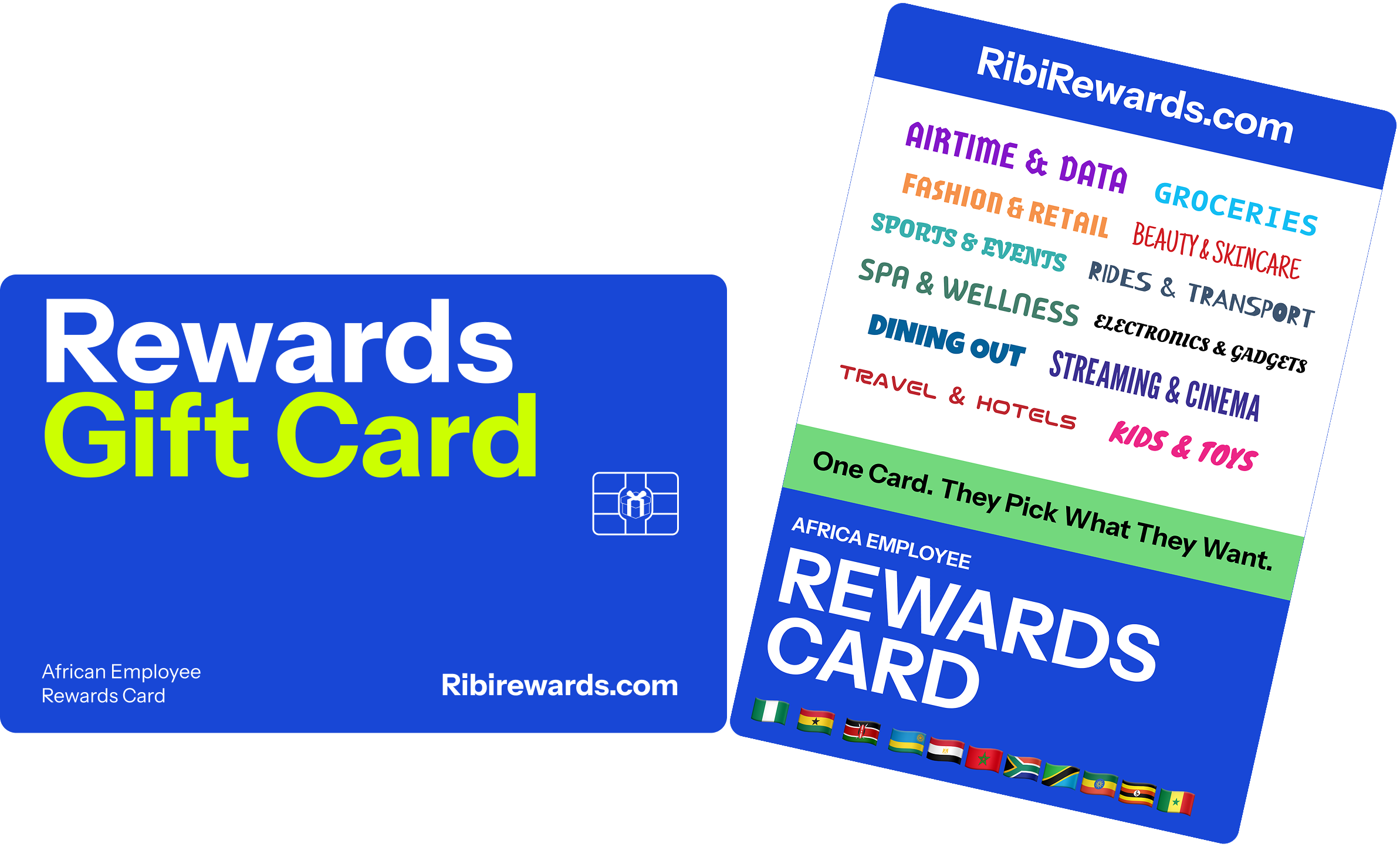
What PaidHR covers -- and where rewards fit
| Employee need | PaidHR | RibiRewards |
|---|---|---|
| Accurate, on-time payroll | Yes | -- |
| Statutory compliance (PAYE, pension) | Yes | -- |
| Cross-border payroll (49 currencies) | Yes | -- |
| Earned wage access (EWA) | Yes | -- |
| Employee financial wellness / loans | Yes (Loan Marketplace) | -- |
| Onboarding welcome gift | -- | Yes RewardsCard -- choice-based |
| Work anniversary recognition | -- | Yes RewardsCard + physical |
| Year-end / festive gifting | -- | Yes Multi-country from one dashboard |
| Performance milestone reward | -- | Yes Choice-based, 10 African markets |
| Employee benefits wallet | -- | Yes HMO, meal, transport, L&D |
Why SMEs especially need the recognition layer
PaidHR's core market is SMEs -- businesses with under 200 employees across Nigeria, Kenya, and South Africa. For these companies, the recognition gap is often the largest because they're competing for talent against bigger employers who can pay more but may not be able to match the culture and care that a well-run SME can offer.
A recognition programme doesn't require a large budget to be effective. A ₦10,000 RewardsCard for a work anniversary, sent with a personalised message and an occasion design in the employee's language, communicates more about how the company values that person than a ₦50,000 bank transfer that gets absorbed into regular expenses by Tuesday. We've looked at the data behind this in cash vs gift cards: what actually motivates employees.
For startups specifically -- which make up a significant portion of PaidHR's customer base -- recognition infrastructure is often the first people investment that gets deprioritised in favour of operational spend. That's understandable but costly. Recognition programmes for startups from 5 to 50 employees covers how to build something effective without a large budget or a dedicated HR team.
EWA vs rewards: why employees need both
PaidHR's own data is instructive here. EWA disbursals show that employees are primarily using early wage access for bills (51.2%), family expenses (16.9%), transportation (10.1%), and feeding (9.9%). These are survival needs -- real, important, and worth solving.
But survival needs and recognition needs are different categories. An employee who uses EWA to cover an emergency bill is not, in that moment, thinking about whether their company sees and values their contributions. Those are separate mental frames. A company that provides EWA but no recognition is addressing financial stress without addressing belonging and value -- and belonging is what drives whether someone chooses to stay.
The complete employee financial and recognition experience looks like: reliable pay (payroll), financial flexibility (EWA), structured credit (loan marketplace), ongoing benefits (benefits wallet), and deliberate recognition (RewardsCard). PaidHR covers the first three exceptionally. RibiRewards covers the last two.
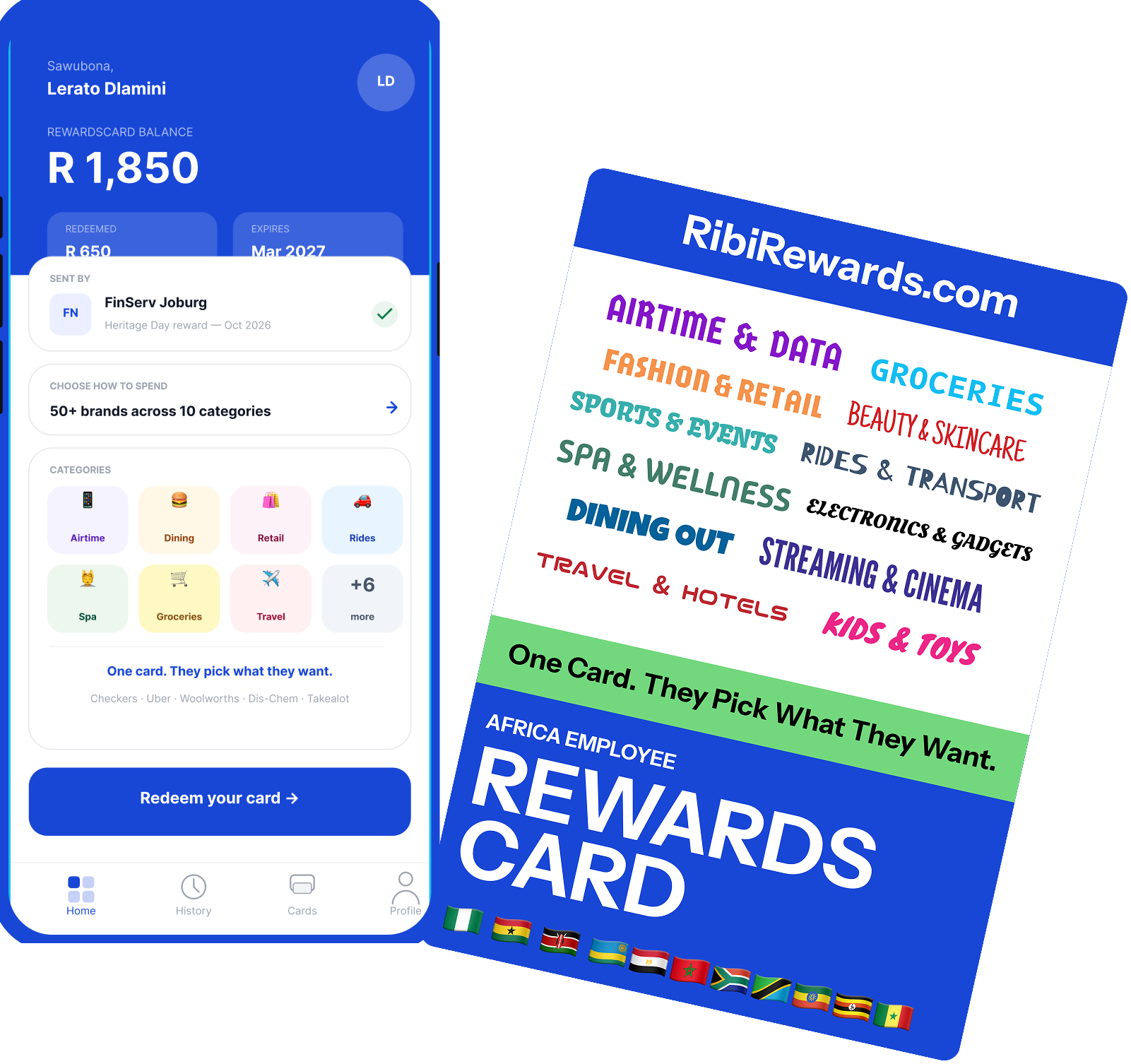
How to add RibiRewards to a PaidHR stack
RibiRewards runs standalone -- no migration, no disruption to PaidHR workflows. Export your employee list from PaidHR, upload to the RibiRewards dashboard with country tags, fund your wallet, and send. For automated triggers (work anniversaries, onboarding completion), the RibiRewards API connects to PaidHR events.
Most PaidHR customers add RibiRewards for one of three starting reasons: year-end gifting, onboarding welcome cards, or work anniversary recognition. All three can be set up and running within a week from the standalone dashboard without any engineering resource.
Add recognition to your PaidHR stack
RibiRewards works alongside PaidHR -- no migration, no disruption. Talk to the team → or explore RewardsCard.
FAQs
Does RibiRewards replace PaidHR?
No. PaidHR handles payroll, EWA, compliance, and employee financial wellness. RibiRewards handles recognition, rewards, and benefits. They serve different functions and sit side by side in a complete employee experience stack.
Is EWA a form of employee recognition?
EWA is financial support infrastructure -- it gives employees access to their own earned wages before payday. It addresses financial stress, which matters. But it is not recognition. Recognition communicates that the company sees and values specific contributions. EWA and recognition solve different problems for different emotional needs.
What's the minimum budget to add a rewards programme for a small team?
There's no minimum. A team of 10 can run a meaningful recognition programme with ₦5,000–₦15,000 per person per occasion. The impact-per-naira of a choice-based RewardsCard significantly outperforms equivalent cash because the spending experience is memorable and associated with the company.
Can RibiRewards work for cross-border teams like PaidHR's multi-country customers?
Yes. RibiRewards supports 10 African markets from one dashboard -- Nigeria, Kenya, Ghana, South Africa, Egypt, Morocco, Tanzania, Uganda, Senegal, and Ethiopia. HR funds centrally and each recipient gets a localised catalogue in their own currency.
Related reading
Abby Sotomiwa
Co-Founder & CEO, RibiRewards
Building rewards and recognition infrastructure for African and diaspora markets.
Africa HR Insights
100 chart-driven data reports on employee rewards, recognition benchmarks, and year-end gifting across African markets — published weekly by RibiRewards.
PaidHR handles payroll. We handle recognition.
EWA is financial support. What your team also needs is acknowledgement. RibiRewards adds the recognition layer your PaidHR stack is missing.
 PRODUCT
We Just Launched RewardsCard on Product Hunt
RewardsCard is Africa's rewards and gifting infrastructure in one card — HR teams send it, recipients pick what they actually want from a real catalogue, live across 29 countries. Here's why we built it, and where to find the launch.
 SEASONAL GIFTING
Why December Gifting Planning Should Start in August
Companies that lock in their December gifting plan months ahead get first pick of pricing, delivery slots and card designs. Here's why the scramble every December is avoidable — and what starting early actually looks like.
 CHOICE REWARDS
One Gift, Infinite Choices: Solving Multi-Country December Gifting
Sending the same fruit basket to a team spread across five countries isn't a gift plan. Here's how choice-based rewards let each person pick what actually matters to them, fulfilled properly in their own market.