 Rewards infrastructure for Africa
Payroll Is Not a Reward: Why African Companies Need Both
SeamlessHR processed ₦950B in salaries in 2025. PaidHR disbursed ₦47.2B more. None of that is recognition infrastructure. Here's why payroll and rewards are different jobs — and what happens when companies conflate them.
Abby Sotomiwa
Co-Founder & CEO, RibiRewards

Quick answer: Payroll tells an employee what they're owed. Rewards tell them what they're worth. The two systems serve fundamentally different psychological functions — and African companies that conflate them end up with employees who feel paid but not recognised. SeamlessHR processed ₦950 billion in salaries in 2025. PaidHR disbursed ₦47.2B more. None of that payroll volume is recognition infrastructure. It's obligation fulfilment. The rewards layer is a separate job — and it needs to be built separately.
The African HR tech stack has matured considerably. SeamlessHR, PaidHR, and a growing number of payroll platforms now process billions in salaries across Nigeria, Kenya, Ghana, South Africa and beyond. The infrastructure for paying people reliably and on time has never been more robust.
And yet employee retention is still a dominant concern for African companies. Talent is still leaving. Recognition programmes are still failing or nonexistent. The question worth asking is: if payroll infrastructure is stronger than it's ever been, why does the recognition problem persist?
The answer is that payroll and recognition are solving different problems. Companies that treat one as a substitute for the other will get better at paying people while remaining poor at retaining them.
What payroll does — and what it doesn't
Payroll is a contract. When a company pays an employee correctly and on time, it is fulfilling its legal and contractual obligation. That's what payroll is designed to do — and platforms like SeamlessHR and PaidHR do it exceptionally well at scale.
But fulfilling an obligation is not the same as expressing value. An employee who receives their salary every month does not, as a result of that, feel recognised. They feel paid — which is what they were promised. The absence of pay dissatisfies. The presence of pay satisfies. Neither produces the emotional signal of being seen and valued that drives loyalty and retention.
This is what Frederick Herzberg described in his two-factor theory of motivation: hygiene factors (like salary) prevent dissatisfaction but don't create satisfaction. Motivators (like recognition) actively create it. The research has held up for decades because the underlying psychology hasn't changed.
What recognition does that payroll can't
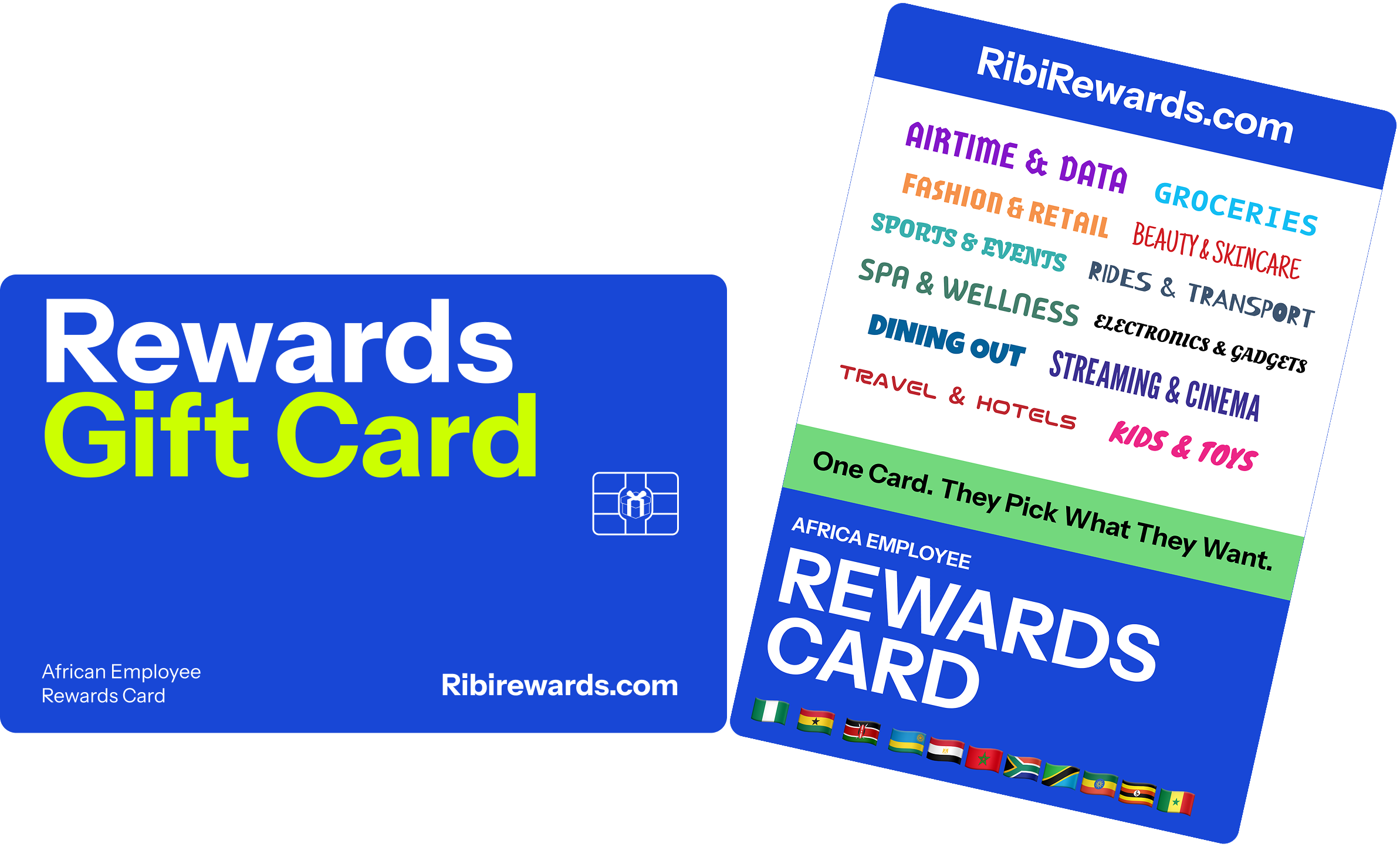
Recognition communicates something payroll can't: that the company sees the specific person, their specific contribution, and has chosen to mark it deliberately. It's the difference between a salary notification and a RewardsCard that says "We see you" in Pidgin or "Hongera" in Swahili — landing on the right person, in their market, in their language, with a catalogue they can actually use.
The specificity is the point. Research on the psychology of choice in rewards consistently shows that the act of receiving something designed for you — even if it's a balance you choose how to spend — produces a fundamentally different emotional response than receiving something generic. The choice architecture in a RewardsCard isn't a feature. It's the mechanism that makes the recognition signal land.
The payroll-to-perks stack: what the complete picture looks like
| Layer | What it does | What it communicates | Platform |
|---|---|---|---|
| Payroll | Pays employees correctly and on time | We honour our contract | SeamlessHR, PaidHR |
| Benefits | Provides HMO, pension, transport, meal allowances | We invest in your wellbeing | RibiRewards Benefits |
| Recognition & Rewards | Marks contributions, milestones, performance | We see you specifically | RibiRewards RewardsCard |
| Financial wellness | EWA, salary advances, employee loans | We support your financial life | PaidHR, SeamlessHR |
The complete employee experience stack requires all four layers. African HR tech has built exceptional infrastructure for payroll and financial wellness. The recognition and rewards layer — despite being the most visible to employees in their day-to-day experience of working for you — is where most companies still have a gap.
Why "just give a bonus" doesn't close the gap
The instinct when someone raises a recognition problem is often to solve it through payroll: increase salaries, give a cash bonus. This is understandable but consistently underperforms.
Cash bonuses, like salaries, fulfil an obligation. They're expected, absorbed, and forgotten quickly. We've documented exactly why year-end bonuses fail — not because the money isn't welcome, but because the emotional signal of being recognised requires more than a bank notification. The recognition moment needs to be distinct from the payroll moment. When they merge, the recognition disappears.
Cash vs gift cards: what actually motivates employees covers this in depth, but the short version is this: a RewardsCard balance of the same financial value as a cash transfer produces meaningfully better recognition outcomes because the spending experience is tangible, deliberate, and associated with the company that sent it.
What this means practically for African HR teams
If you're already on SeamlessHR or PaidHR, your payroll infrastructure is solid. The question is what sits on top of it. A complete HR stack in 2026 looks like:
- Payroll platform — handles salary processing, compliance, statutory deductions, cross-border payments.
- Rewards infrastructure — handles recognition moments: onboarding gifts, work anniversaries, performance milestones, year-end, festive occasions. RewardsCard covers all of these across 10 African markets from one dashboard.
- Benefits platform — handles ongoing employee benefits: HMO top-ups, meal allowances, transport, learning budgets. RibiRewards Benefits handles this category.
These aren't competing systems. They're complementary layers. The payroll platform pays people. The rewards platform makes people feel valued. Both matter. Neither is a substitute for the other.
Add the recognition layer to your HR stack
RibiRewards works alongside your existing payroll platform — SeamlessHR, PaidHR, or any other. Add choice-based rewards and benefits across all your African markets from one dashboard. Talk to the team →
FAQs
Does RibiRewards integrate with SeamlessHR or PaidHR?
RibiRewards is API-first and can be integrated with any payroll or HRIS platform. For companies using SeamlessHR or PaidHR, this means recognition and benefits can be triggered and managed alongside existing payroll workflows without rebuilding your HR stack.
Why do employees still leave even when they're paid well?
Because pay fulfilment and recognition are different psychological needs. Salary addresses the contractual obligation. Recognition addresses the human need to feel seen and valued for specific contributions. Companies that only optimise for payroll accuracy miss the retention driver that recognition addresses.
What is the ROI of adding a rewards layer?
Companies using choice-based recognition infrastructure see 43% better retention outcomes compared to those using fixed vouchers or cash transfers. The ROI calculation is straightforward: the cost of a RewardsCard programme is typically a fraction of the cost of replacing an employee who leaves because they don't feel recognised.
Can RewardsCard work for teams spread across Nigeria, Kenya, and Ghana?
Yes. RewardsCard supports 10 African markets from one HR dashboard. Each recipient gets a catalogue localised to their country in their local currency. HR funds centrally and distributes across all markets in a single workflow.
Related reading
Abby Sotomiwa
Co-Founder & CEO, RibiRewards
Building rewards and recognition infrastructure for African and diaspora markets.
RibiRewards Insights
Practical analysis on incentive strategy, programme operations, reward delivery, markets and infrastructure across Africa.
Start treating recognition as infrastructure
One wallet, one dashboard, every market. Book a call and we'll calculate what a recognition programme costs versus what attrition is costing you right now.
Gift Card API for Africa: Multi-Country Rewards Through One Integration
A practical guide to integrating local gift cards and reward delivery across African markets without building a supplier stack country by country.
Africa Rewards API: A Technical Guide for Global Reward Platforms
What global rewards, loyalty and incentive platforms need from an African rewards API: catalogue, funding, issuance, webhooks, reconciliation and local fulfilment.
How Global Incentive Platforms Can Add African Reward Coverage
A commercial and operational framework for extending an existing incentive or rewards platform into African markets through one infrastructure partner.